
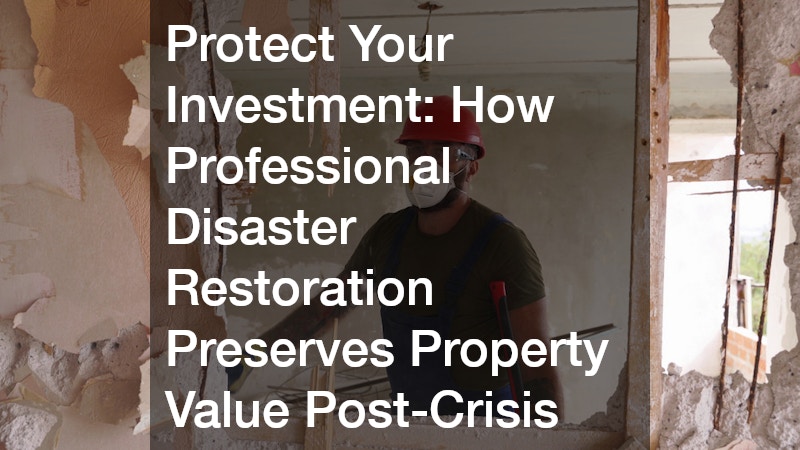

In the aftermath of a disaster, preserving the value of your property can be a daunting task. Professional disaster restoration services play a critical role in navigating these challenging times. Their expertise not only minimizes immediate damage but also ensures the property’s long-term value is protected.
What Does Disaster Restoration Involve?
Understanding the Scope of Restoration Services
Disaster restoration encompasses a wide range of services designed to restore properties to their pre-crisis conditions. This includes water extraction, structural drying, and the removal of smoke and soot after a fire.
The adaptability and breadth of these services are essential in effectively managing the unique demands of each disaster type.
These services extend beyond simple cleaning and repair, often requiring specialized equipment and techniques. Professional services are equipped with industrial-grade tools and resources that far exceed the capabilities of standard cleaning solutions. By leveraging these resources, restoration professionals can address both visible damage and underlying issues that could affect property value.
Moreover, the comprehensive approach ensures a more thorough restoration process, leaving no aspect of the damage unchecked. Whether dealing with biological hazards or structural damage, a well-rounded service can make a significant difference in recovery outcomes. This holistic method is essential in safeguarding the property’s future and marketability.
The Role of Professionals in Restoration
Professional disaster restoration teams bring unmatched expertise to the table in moments of crisis. Their training allows them to quickly assess the situation and develop a tailored plan of action. The immediacy of a professional response is crucial to curb the potential growth of damage, such as mold and structural deterioration.
Additionally, professionals understand the intricacies of insurance and can advocate on behalf of property owners during claims processing. Their ability to document and communicate every step aids in ensuring fair compensation and a smooth recovery process. This expertise helps mitigate financial strains, maintaining or even restoring property value swiftly.
Ultimately, the professional touch in restoration emphasizes quality and cost-efficiency. Their precise work not only returns properties to habitable states but also preserves their aesthetic and financial worth in the long run. Trusting professionals with this process thus guarantees a higher standard of care and lasting investment protection.
Types of Disasters and Corresponding Restoration Techniques
Different disasters require specialized approaches in restoration to address specific damage types. For example, water damage from flooding involves drying and dehumidification procedures, while fire damage demands soot and odor removal. The successful application of these techniques determines the restoration’s effectiveness in value preservation.
Each disaster also introduces unique materials and hazards that must be handled appropriately. Whether it’s lead paint, asbestos, or biohazard cleanup, professionals bring targeted solutions to ensure safety and compliance with health regulations. This attention to detail establishes a reliable safety net, preventing further depreciation of property value.
Moreover, advanced restoration techniques also enhance the durability and resilience of properties against future incidents. By employing cutting-edge technology and sustainable practices, professionals not only restore properties but improve their overall resistance. This proactive reinforcement is invaluable in maintaining property value against the unpredictable nature of future disasters.
Why Is Timely Restoration Crucial for Property Value?
Preventing Further Damage
Timely intervention post-disaster is key to preventing multiple forms of subsequent damage. The sooner restoration begins, the less opportunity there is for secondary issues, such as mold growth and structural weakening, to develop. By minimizing further damage, the original investment in the property is preserved more effectively.
Delayed restoration allows conditions to worsen, complicating repair efforts and inflating associated costs. Consequently, extended exposure to moisture or contaminants increases the risk of irreparable damage, which directly impacts market value. Addressing issues promptly not only curbs this decline but sets the stage for a quicker, more robust recovery.
Finally, swift restoration efforts mitigate interruptions to living conditions or business operations, preventing further economic loss. This responsive approach is crucial, not just for the physical aspects of the property, but for its functional and economic utility. In essence, a timely response acts as a safeguard, preserving both the property’s integrity and economic potential.
Maintaining Aesthetic and Structural Integrity
The visual and structural components of property are significant determinants of its market value. Disasters can heavily impact these elements, which necessitates a focused restoration effort dedicated to maintaining original appearance and safety. Adding to this challenge is the task of ensuring structural improvements meet current safety standards.
Through professional restoration, damaged aesthetics are restored, and building codes and safety regulations are met or exceeded. The comprehensive nature of this work ensures that from outward appearance to foundational elements, every inch of the property is protected. Thus, restoring both beauty and safety in tandem helps secure the property’s value.
Moreover, maintaining the aesthetic charm and structural soundness facilitates easier future transactions. Prospective buyers or investors emphasize these factors heavily in their evaluations. Therefore, a well-executed restoration increases the competitiveness and appeal in the real estate market, reinforcing the property’s position as a valuable asset.
How to Choose the Right Disaster Restoration Professional?
Credentials and Experience
When selecting a disaster restoration service, a company’s credentials and experience are paramount. Certified professionals have undergone rigorous training, ensuring competency in handling various types of disaster damage. Their experience in real-world scenarios further equips them to manage complex situations effectively, which is critical for preserving property value.
Look for certifications from reputable industry bodies, which indicate adherence to high standards in disaster restoration practices. These qualifications are a testament to a professional’s commitment to quality work and continuous improvement. This level of expertise usually correlates with better outcomes, establishing trust and reliability with clients.
A company’s experience in the field assures clients of their capability to deliver high-quality, consistent service. Firms with extensive track records likely possess well-established processes and comprehensive knowledge of sophisticated restoration techniques. Choosing such a professional can make the pivotal difference in restoring a property’s full potential and worth.
Evaluating Past Work and Client Testimonials
A valuable method in vetting a restoration service is through examining their previous work and client feedback. Investigating past projects can provide insights into the company’s quality of work, efficiency, and success rate in restoring various property types and damages. Client testimonials offer first-hand accounts of satisfaction and areas where the company excels.
Photographic evidence of before-and-after results helps visualize the company’s expertise in restoring value and aesthetics. Potential clients can assess if the company is capable of meeting similar needs as those demonstrated in previous tasks. Understanding this capability ensures customers confidently select a service that aligns with their unique restoration needs.
Positive testimonials underscore a company’s reputation for client satisfaction and reliability. Candidates with strong endorsements are more likely to deliver higher levels of service quality and customer care. By taking these factors into account, property owners can make well-informed decisions that protect their investments in the long run.
Professional disaster restoration services hold a pivotal role in safeguarding property value after a crisis. Through expert analysis and timely solutions, they not only restore properties to their pre-disaster conditions but also enhance their resilience for the future. These services ensure that investments are protected and property retains its long-term value and appeal.